Welcome to our official website-You can order various kinds of products in plastic packaging on the website!


Material

High-Density Polyethylene (HDPE):
Features: Lightweight, stiff, and less stretchy
Uses: Lightweight bags (e.g., grocery store bags, recycling bags).
Uses: Lightweight bags (e.g., grocery store bags, recycling bags).

Low-Density Polyethylene (LDPE):
Features: Flexible, stretchy, and tear resistant.
Uses: General-purpose bags, including kitchen, heavy-duty bags
Uses: General-purpose bags, including kitchen, heavy-duty bags

Green PE:
Raw Materials: Bio-based plastics are made from biomass, such as sugarcane, which captures carbon from the atmosphere throughout its growth.
Features: Sustainable, reduce global carbon emissions.
Uses: General-purpose bags with an eco-friendly focus.
Features: Sustainable, reduce global carbon emissions.
Uses: General-purpose bags with an eco-friendly focus.

Recycled Plastics (GRS):
Raw Materials: Made from repurposed post-consumer or industrial plastics (e.g., recycled PE).
Features: Eco-friendly and sustainable, though may have slightly reduced strength compared to virgin plastics.
Uses: General-purpose bags with an eco-friendly focus.
Features: Eco-friendly and sustainable, though may have slightly reduced strength compared to virgin plastics.
Uses: General-purpose bags with an eco-friendly focus.

Compostable
Raw Materials: Plant-based materials like cornstarch, polylactic acid (PLA), or PBAT.
Features: Breaks down naturally in composting environments.
Uses: Compostable bags for food waste or organic materials.
Features: Breaks down naturally in composting environments.
Uses: Compostable bags for food waste or organic materials.

Biodegradable
Raw Materials: Conventional polyethylene mixed with additives that accelerate degradation (D2W or EPI).
Features: Decomposes into microplastics under UV light and oxygen exposure.
Uses: Environmentally friendly alternatives for regular bags.
Features: Decomposes into microplastics under UV light and oxygen exposure.
Uses: Environmentally friendly alternatives for regular bags.
Packaging
We offer custom packaging solutions, such as flat packing, roll packing, and more. Customers’ branding will be printed on the final packaging.
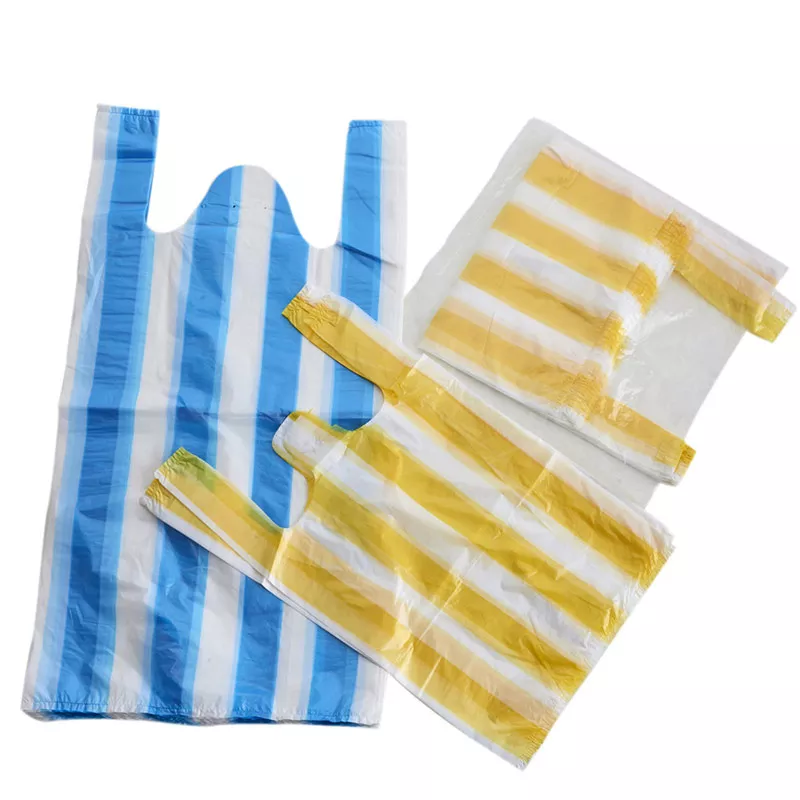 Flat pack
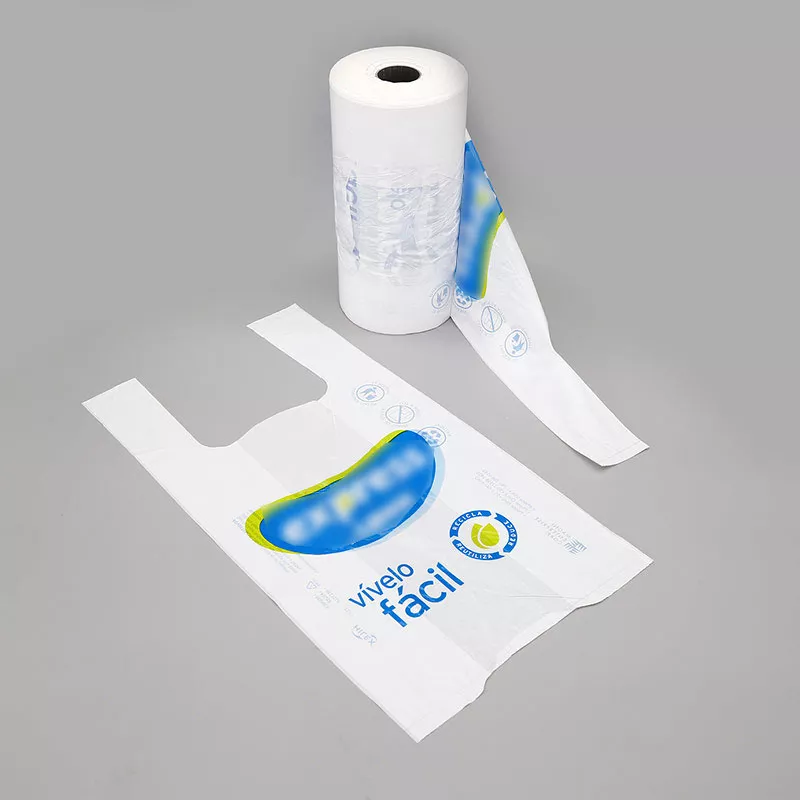 On roll
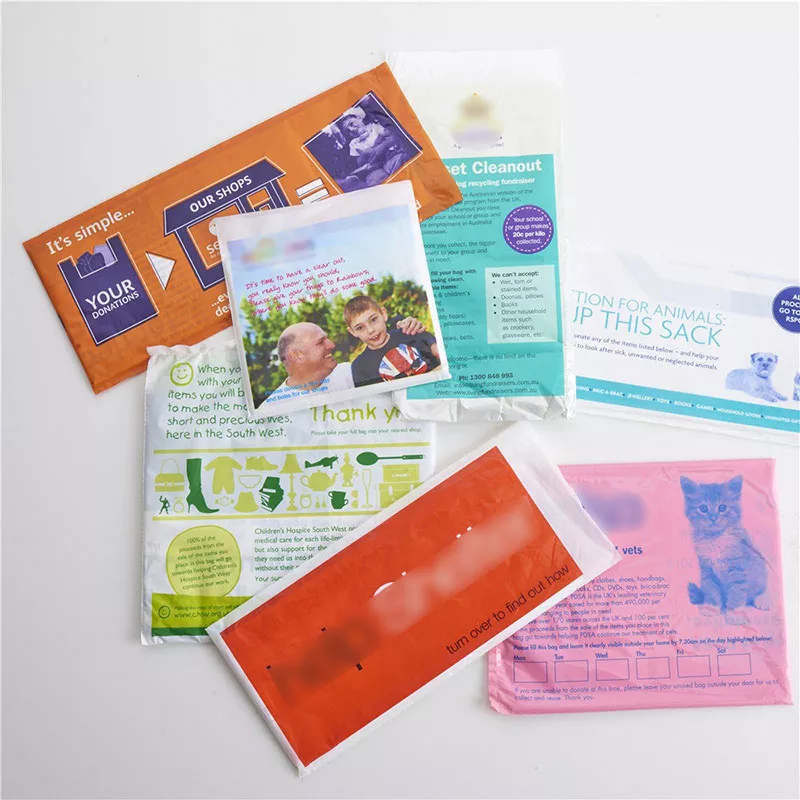 For Charity bagIndividually Folded and packed into a envelope or PE bag
Application
The application scenarios of T-shirt bags are diverse.
In daily shopping, they are commonly used in supermarkets, grocery stores, and convenience stores. Customers use them to carry purchased items such as groceries, daily necessities, and small commodities, providing a convenient and practical way to hold things while on the go.
In restaurants, they are used in take - out and delivery services. These services often use t - shirt bags to pack food orders.
In charitable donation activities, T-shirt bags can be used as charity bags. they can be distributed to people who want to donate their old clothes, books, toys, and other items. The bags provide a convenient way for donors to pack and transport their donations, ensuring that the items are kept organized and clean during the donation process. Charities can also use these bags to collect and distribute donated goods more efficiently, helping those in need.


